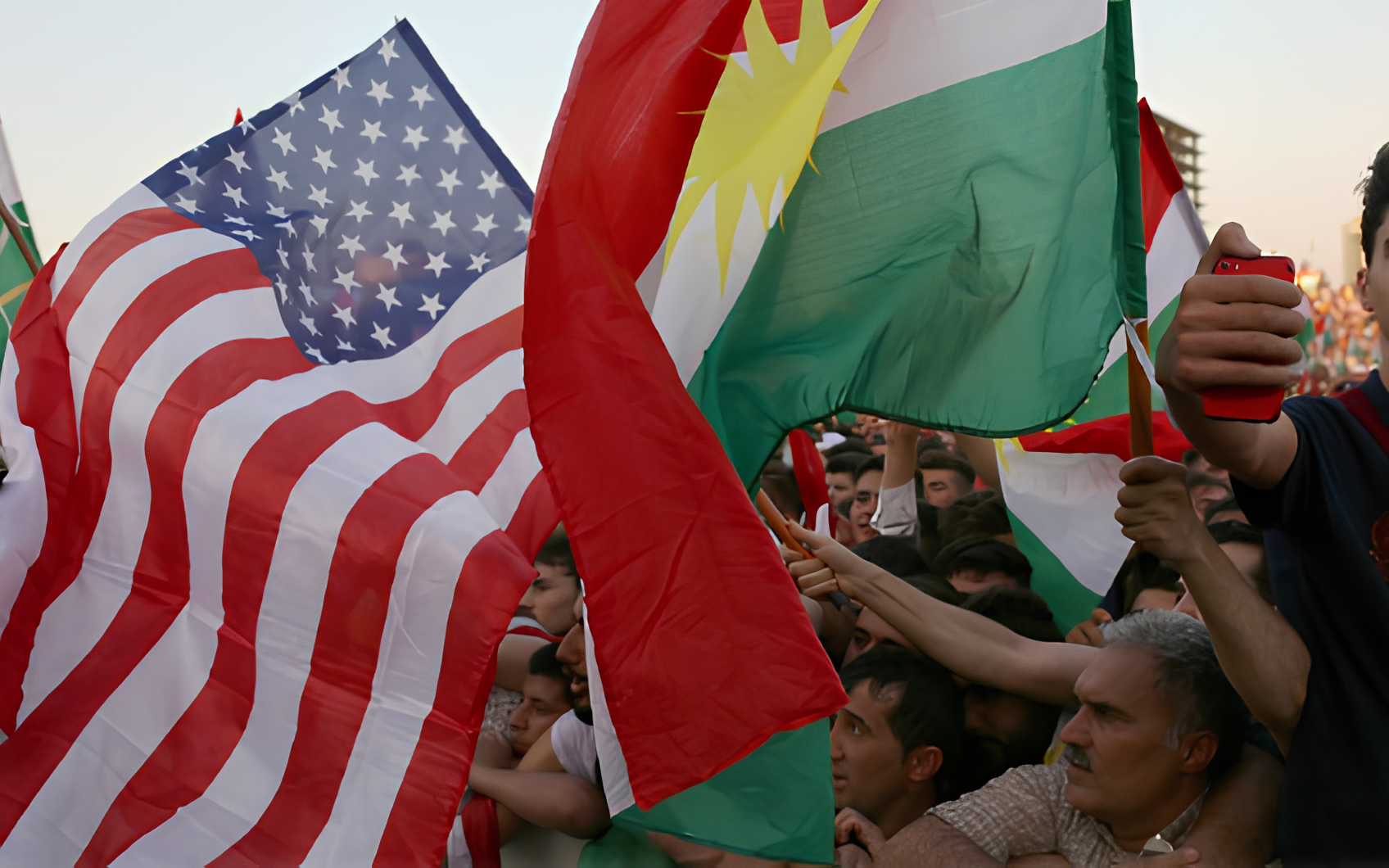
For decades, the Kurds have been described as the world’s largest stateless nation. Today, however, this once-marginalized ethnic group may no longer be stateless and may be approaching a geopolitical reality with significant political and military influence in at least three countries: Iraq, Syria and potentially Turkey. At the heart of this transformation is a long-term Western strategy, quietly advanced through war, diplomacy and alliances, and increasingly shaped around US interests.
The Kurdish trajectory began to change after the Gulf War in the early 1990s. After the defeat of Saddam Hussein, the Kurds in northern Iraq created a de facto autonomous region under US protection. This autonomy was consolidated after the American invasion in 2003. The Kurdistan Regional Government (KRG) established its own parliament, flag and even a central bank. Although Kurds are a minority in Iraq, they have played an active role in the post-Saddam political order, with the presidency usually reserved for a Kurdish politician.
In Syria, a parallel path has been followed since the outbreak of the civil war in 2011. With the weakening of state control in the north, Kurdish groups quickly established the Autonomous Administration of Northern and Eastern Syria and were militarily supported by the US-led coalition in the fight against ISIS. Through the Syrian Democratic Forces (SDF), the Syrian Kurds have become an important actor in both the fight against terrorism and in shaping Syria’s political future. Today, with American support, their influence is not limited to Kurdish areas, but is also growing in Damascus. A Kurdish prime minister or president in Syria in the near future is no longer unthinkable.
All eyes are now on Turkey. For decades, the Kurdish question has been one of the most contentious issues in Turkish politics. The PKK (Kurdistan Workers’ Party), designated a terrorist group by Turkey and its NATO allies, has waged an armed struggle against the state since the 1980s. But in a surprising development, the far-right Nationalist Movement Party (MHP), traditionally known for its hardline stance against Kurdish autonomy, has backed a new initiative called “Turkey without Terror”. Under this project, Ankara implies softening its stance towards the PKK and opening space for a normalized Kurdish political presence.
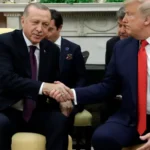
Even more striking is the marked softening of rhetoric by President Erdoğan, who has long been a vocal critic of the SDF in Syria. The SDF, which Ankara has long equated with the PKK, has been largely invisible in Erdoğan’s speeches. Some reports suggest that Turkey is preparing to position itself as a regional mediator or patron of Kurdish autonomy in Iraq and Syria in exchange for political survival and strategic leverage.
While Turkish officials maintain that they have made no official concessions, legitimizing decades-old Kurdish militant structures is in itself a profound shift. For those watching from Washington, or possibly London, it fits into a broader geopolitical plan that has evolved since the Cold War: “The Grand Kurdish Strategy.”
This strategy envisages the creation of autonomous Kurdish regions in Iraq, Syria and Turkey. These regions would initially remain within their own states, but would operate with increasing independence, develop their own institutions and gain influence in national capitals. Over time, if political conditions permit, these autonomous regions could be more formally aligned, perhaps even united under a Kurdish federation or confederation.
Who is behind this strategy is still a matter of debate. While the US has provided military and financial support to Kurdish forces, particularly in Syria, some observers believe the initiative has deeper roots: In the UK’s post-colonial regional designs or in the West’s desire to reshape the Middle East to contain rival powers such as Iran, Russia and even Turkey.
Regardless of who drew the blueprint, the current implementer seems to be Erdoğan. Paradoxically, the Turkish president, who has long adopted a rhetoric hostile to Kurdish aspirations, is now dependent on new alliances to maintain his power amid domestic and international challenges. In exchange for survival, Erdogan may be willing to participate in what was once unthinkable: To ensure the emergence of an official Kurdish political presence in three important states in the Middle East.
If the plan succeeds, the Kurds could become the region’s newest power brokers. This outcome will be shaped not by revolution, but by strategic patience and quiet maneuvering from Washington to Erbil to Damascus.