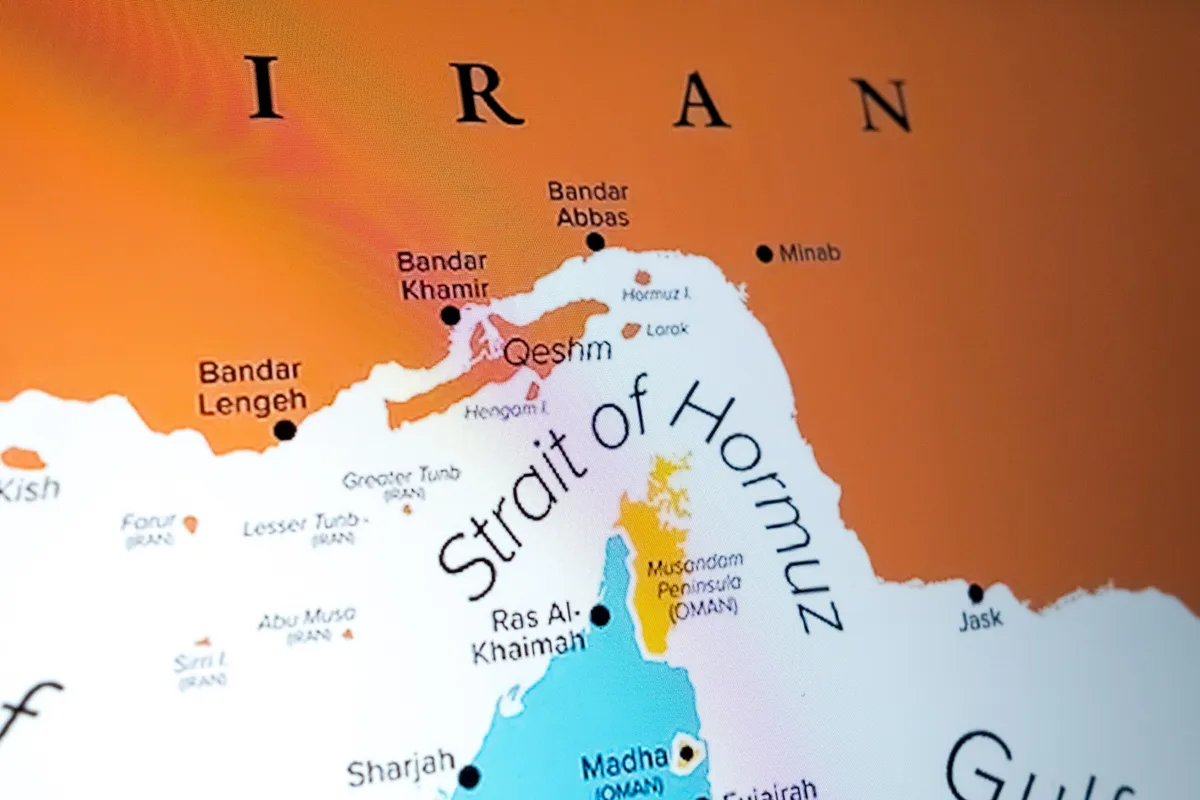
The regional ruptures that accelerated after October 7 seem to have brought the Iran-centered tension to a new and more open phase by 2026. The deepening of the conflict beyond land and airspace into maritime lines and energy security makes the Strait of Hormuz a critical threshold not only for regional but also for global balances.
The process that began on October 7, 2023 quickly turned into a breaking point that shook the regional balance. Israel’s harsh military response, the activation of the Lebanese and Yemeni theaters, the collapse of the Syrian regime structure, and increased direct contacts throughout 2025… All these developments eroded the sphere of influence Iran had built up over the years and transformed the covert conflict into an open showdown by 2026.
To understand this picture, we need to remember Carl von Clausewitz. The 19th century Prussian general laid the foundation of modern war theory with his work On War. The fact that he had personally experienced the Napoleonic Wars transformed his thoughts from theoretical to field-based. According to Clausewitz, war is not an irrational destruction, but a rational tool used by states to achieve their political goals. Today’s events can also be read in this framework: war is the continuation of politics through other means.
For the US and Israel, it is about changing the existing order and establishing a new balance of power. For Iran, the issue is much clearer: survival.
However, a new reality has emerged on the ground. Conflict is no longer limited to land and air elements. The center of gravity of the war is shifting to the sea. And the heart of this new era is the Strait of Hormuz.
HORMUZ AND THE NEW STRATEGY: AN ASYMMETRIC SQUEEZE
Iran’s recent steps show an effort to draw the US directly into the geography of its choice. Weak on the high seas, Iran aims to establish an advantage in narrow and controllable areas. The Strait of Hormuz is the center of this strategy.
This is not so much a “trap” as a controlled squeeze. Mines, fast attack boats, coastal missiles and unmanned systems… Iran is balancing not with a conventional naval force, but with cost-increasing asymmetric means.
It is clear that Iran will not only remain on the defensive in the coming period. Direct or indirect attacks against the Gulf states may increase. Energy infrastructures, ports and tanker lines may become targets. The aim of this strategy is clear: to spread the cost of war regionally and globally.
THE BREAKING POINT IN HORMUZ: FROM REGIONAL WAR TO GLOBAL CRISIS
An attempt to control or military escalation in the Strait of Hormuz would no longer be a limited conflict; it could mean an all-out war.
This is not just a showdown between Iran and the US. Global energy flows would be directly affected. Oil prices would skyrocket, supply chains would be disrupted and the world economy would suffer a serious shock.
More critically, this crisis has the potential to trigger great power rivalry. Given China’s energy dependence, a crisis in Hormuz could draw Beijing directly into the process. Thus, a regional war could turn into a hotter front of US-China rivalry.
From this point on, the issue ceases to be an Iranian issue; it turns into a breaking moment in which the global order is reshaped.
RISKS AND HISTORIC OPPORTUNITIES FOR TÜRKİYE
The implications of this picture for Turkey are extremely serious.
The first and most tangible risk is economic. A crisis in Hormuz would push up energy prices sharply. For a country like Turkey, which is dependent on energy imports, this would put direct pressure on inflation, the current account deficit and growth.
The second risk is security. New waves of instability in Iraq and Syria could challenge Turkey’s border security. Possible migration flows and power gaps could increase Ankara’s military and political burden.
But this picture is not just about threats.
The energy crisis may increase Turkey’s geopolitical value. Europe’s search for alternatives may highlight Turkey as an energy corridor and logistics hub. Central Corridor projects and existing lines may become more critical.
Diplomatically, Turkey can stand out as one of the rare actors that can talk to both the West and the region. Assuming a mediation role in a potential crisis could increase its international weight.
The deepening of the US-China rivalry creates a two-way field of opportunity and risk for Turkey. Economic and strategic gains are possible if the right balance is struck. However, the wrong positioning could bring serious pressures.
As a result, a breakout centered on Hormuz could be the beginning of not just a war, but a process of reshaping the global order. For Turkey, the issue is clear: the stakes are high, but with the right strategy, this crisis can also turn into a historic opportunity.
Image Source: Javier Blas, “The US Has to Reopen the Strait of Hormuz as Soon as Possible,” Bloomberg Opinion, March 3, 2026. Photo: NurPhoto / Getty Images.