Since the invasion in 2022, Russia’s war on Ukraine has shaken the geopolitical balance and had a profound impact on international relations. More than just a regional conflict, this war reflects Russia’s multi-layered strategy that tests the unity of the Western alliance (especially the EU and the US), aims to undermine Ukraine’s sovereignty claims, and seeks to maintain its global power projection. Developments in the summer of 2025, especially Trump’s peace initiatives, the Alaska and Washington summits, and Russia’s attacks on Kiev, clearly demonstrated both the military and diplomatic dimensions of this strategy.
Russia’s Multilayered Strategy
Russia’s war in Ukraine is based on a multi-layered strategy combining military, diplomatic and psychological moves aimed at breaking the Western alliance’s (especially the EU-US axis) support for Ukraine, weakening Ukraine’s sovereignty claims in the international community and maintaining its power projection on the global stage. This strategy is based on a paradigm that sees Western expansion (NATO and EU integration) as a security threat since the 2022 invasion. Against this backdrop, July and August 2025 constituted a critical timeline for the implementation of the strategy.
July and August: Diplomacy and Military Provocations
In the summer of 2025, developments in the shadow of Donald Trump’s peace initiatives clarified Russia’s strategy. On July 28, US President Trump gave Russia a new deadline of 10-12 days to end the war in Ukraine, shortening the previous 50-day deadline, and threatened sanctions if there was no progress. Russia responded to this ultimatum by stepping up its attacks, for example by launching a drone strike on Kiev the same day, defying peace efforts. The August 15 Trump-Putin summit in Alaska had the effect of breaking Trump’s ultimatum in its nature and outcome. The three-hour meeting ended with claims of “great progress” but no concrete agreement. Putin maintained his maximalist stance, demanding that the “root causes” (Ukraine’s withdrawal from NATO, denazification, the end of Zelensky’s rule) be resolved, and warned Europe “not to make backdoor deals”.
After the summit, Zelensky and European leaders (Mark Rutte, Ursula von der Leyen, Keir Starmer, Macron, etc.) met in Washington on August 18, hosted by Trump. The meeting discussed security guarantees for Ukraine, similar to NATO’s Article 5, and proposed a Zelensky-Putin trilateral summit. While this meeting reflected European efforts to persuade Trump, it also reinforced Russia’s strategy of turning diplomacy in its favor. The Western embargo on Putin’s visits was broken, while Russia continued its military operations, increasing war pressure on European leaders and deepening EU-US discord.
August 28 Kiev Offensive
The August 28 attack on Kiev was one of the clearest examples of Russia’s success in integrating military provocations with diplomatic maneuvers. In the morning hours, Russia targeted the capital Kiev with 600 drones and more than 30 ballistic missiles, hitting strategic military targets and infrastructure facilities such as the Bayraktar Unmanned Aerial Vehicle (UAV) factory. The strikes also hit the building next to the European Union Delegation Office, killing 17 people (including 4 children). This attack was a follow-up to the warning to Europe at the Alaskan summit; Russia challenged the West’s desired peace efforts (security guarantees, sanctions) by sending a message to the EU, in military language, to “stop your integration in Ukraine”. The President of the European Commission, Ursula von der Leyen, described the attack as “terrorism” and announced that the EU’s 19th sanctions package would soon come into force. The attack both frustrated European leaders’ peace initiatives and created tensions that are likely to trigger a new debate between Trump and EU leaders.
Beijing Ceremony: Global Show of Power
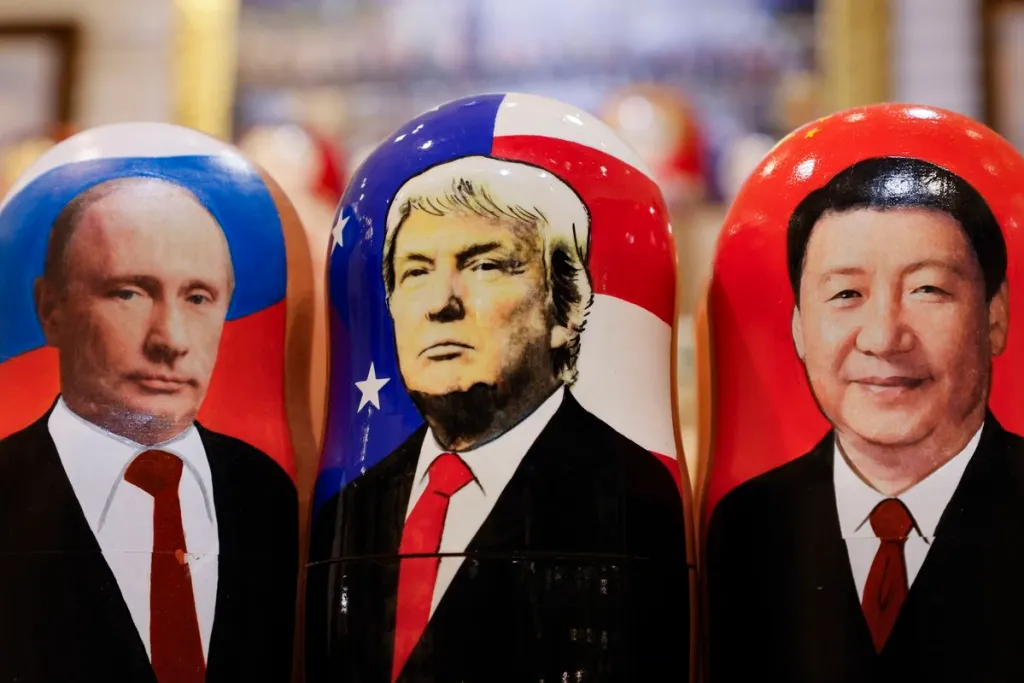
The September 3 ceremony in Beijing could take Russia’s strategy to a global scale. The 80th anniversary of Russia’s victory in World War II, hosted by China, is a show of strength with a military parade and the participation of leaders. Putin’s meeting with Xi, Kim Jong Un, and the leaders of Iran and Belarus is expected to reinforce Russia’s stance against the West. The ceremony will showcase China’s diplomatic clout, strengthen Russia’s war-torn image, and could pave the way for alternative alliances (China-North Korea). Despite Trump’s efforts to bring Russia to his side against China after his re-election, the rapprochement at the summit could be written off as a relative failure for Trump. Experts assess that the participation overshadowed the peace initiatives at the Alaska and Washington summits, reflected Russia’s strategy of shifting Ukraine peace to Chinese mediation, and sent a message that “you cannot isolate” Russia in the face of new EU sanctions. The event, with its economic (Chinese dependence) and military (North Korean arms support) dimensions, could strengthen Russia’s efforts to circumvent sanctions.
Conclusion
Russia’s strategy in Ukraine reveals a multi-layered approach shaped by military strikes, diplomatic maneuvers and global alliances in the summer of 2025. The August 28 attack on Kiev reflects Russia’s aim to sabotage Western peace initiatives and undermine the EU-US alliance. Putin’s visit to Beijing, on the other hand, is read as an effort to break Russia’s isolation and create an alternative power bloc on the China-North Korea axis. This process presents a picture in which Russia not only targets Ukraine’s infrastructure during the attrition phase of the war, but also continues to psychologically and diplomatically challenge the Western alliance. The West seems to be far from developing a coherent and clear response to this strategy.