The Iran-Israel conflict can no longer be read solely as a regional security crisis. The course of the war reveals not only how the US manages its military and political capacity, but also how China and Russia shape the process through indirect support mechanisms. This picture shows that great power competition today is often conducted not on direct fronts, but through energy, technology, intelligence, weapon systems and proxy actors.
The US-Israeli-Iranian war that erupted on February 28 is no longer just a regional conflict; it is gradually turning into a multi-layered struggle in which global power competition is reflected on the field. Today, the question is not “who is winning?” but how this war is managed by the great powers and for what purposes.
In this framework, China and Russia are among the most decisive actors in the process, even if they are not directly visible on the ground. Both countries are deliberately avoiding an open military confrontation with the United States, but are intervening in the course of the war by creating an indirect sphere of influence through Iran. This clearly demonstrates that in today’s international system, great powers prefer to create maximum impact with limited risk rather than direct confrontation.
From China’s perspective, energy security, not ideological posturing, is at the center of this war. China’s economy is heavily dependent on foreign energy and a significant portion of the oil it imports comes from the Gulf region. Therefore, the decisive factor for Beijing is not the military success of either side, but the uninterrupted flow of energy.
Economic relations between Iran and China also support this picture. China is the largest buyer of Iranian oil and the long-term strategic agreements between the two countries further deepen this bond. This makes Iran economically dependent on China to a significant extent, while allowing China to have an influence on the ground without being directly visible.
Nevertheless, China’s approach is not characterized by overt military support. Rather, a more balanced and careful policy is being pursued. While maintaining the appearance of overt neutrality, indirect support is provided through dual-use technologies, production equipment and various materials to increase Iran’s resilience. This approach allows China to both influence the balance on the ground and maintain its position in the international system.
China’s strategy is not limited to Iran. At the same time, North Korea is also being given room for maneuver. Especially if the conflict intensifies further in the summer months, North Korea is likely to become a more visible actor. A new line of tension between the US and North Korea is a strategic advantage for both China and Russia. This is because it would spread the US’s military and political capacity over a wider area and divide its resources.
Russia, on the other hand, focuses more on the security and military dimension than China. Although Moscow avoids direct involvement in the war, it sees the conflict as an important opportunity to divert US attention to a different front. The deepening military ties with Iran in recent years also support this approach.
The military systems, fighter jets and missile technologies provided by Russia to Iran are among the factors directly affecting the balance on the ground. While this support continues gradually, it is becoming an important factor that increases Iran’s operational capacity.
In addition, Russia, like China, contributes to Iran through intelligence and satellite data. Especially critical data such as targeting and location information are among the factors that directly affect the balance of power on the ground. Such support shows that war is not only fought militarily, but also through information and data.
Another important factor at this point is the gradual decline in the stockpiles of weapons that the US has been using extensively in the region. This has important implications not only in terms of military capacity but also in terms of strategic balance. While the dwindling stockpiles contribute to Russia’s indirect relief in the Ukraine war, the data obtained through the systems used in the field allow China and Russia to learn more about the US military inventory.
Another dimension of the war for Russia is the concept of controlled crisis. Moscow does not want Iran to collapse completely, but it also recognizes that a certain degree of weakening could work in its favor. Higher energy prices help the Russian economy, while the distraction of the West relatively reduces the impact of sanctions. Therefore, Russia is pursuing a balancing policy that benefits from a certain level of continuation of the crisis rather than a complete end to it.
In general terms, China and Russia’s approach to Iran is based on two complementary strategies. While China is sustaining the system through economic power, financing and technology, Russia is strengthening resistance on the ground through military capacity, intelligence and security cooperation.
The emerging picture shows that a mechanism is at work that can influence the outcome on the ground without directly engaging in war. The combination of China’s financial and technological support and Russia’s military and intelligence contribution creates a large-scale and indirect sphere of influence.
OUTCOME: STRATEGY RATHER THAN THE FIELD IS DECISIVE
As a result, the Iran-Israel war has transformed beyond the conflicting actors on the ground into a field of competition between global powers. While the US has to manage multiple lines of tension at the same time, China and Russia are trying to steer this process in line with their own strategic objectives. The possibility of North Korea becoming more visible suggests that this multi-layered pressure may increase.
In the short term, a clear winner is unlikely to emerge. However, it is becoming increasingly clear that in the long run, it will not be the conflicts on the ground that will be decisive, but the strategic moves that drive these conflicts.
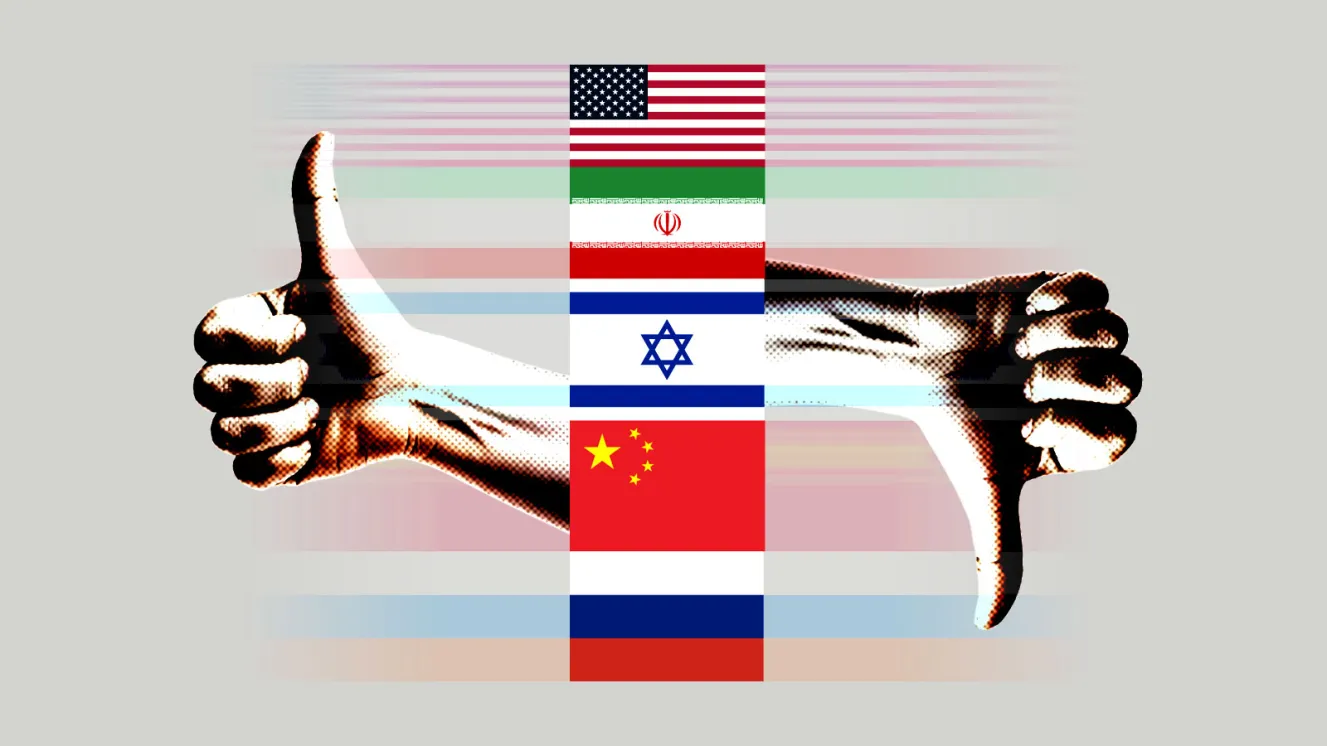
Image Source: The image used in this analysis is taken from the article titled “Who won and lost the Iran-US war?” published in The Times. Source: https: //www.thetimes.com/world/middle-east/article/who-won-lost-iran-us-war-5h87w8rhd