The escalating tension between the US and Iran over developments centered on the Strait of Hormuz is not only a bilateral crisis but also a multi-layered geopolitical challenge that simultaneously affects energy security, maritime trade and regional conflict dynamics. Beyond the military balances in the Middle East, this process has the potential to have significant consequences for the global economy and international order.
Blockade, Energy and the Dynamics of Multi-Front War
The rapidly escalating crisis between the United States and Iran is not limited to military and diplomatic tensions between the two countries, but seems to have turned into a multi-layered regional and global power struggle. Developments, especially through the Strait of Hormuz, create a critical breaking point in terms of energy security, trade flows and geopolitical balances. The Trump administration’s decision to impose a naval blockade on Iran stands out as one of the main factors accelerating this rupture.
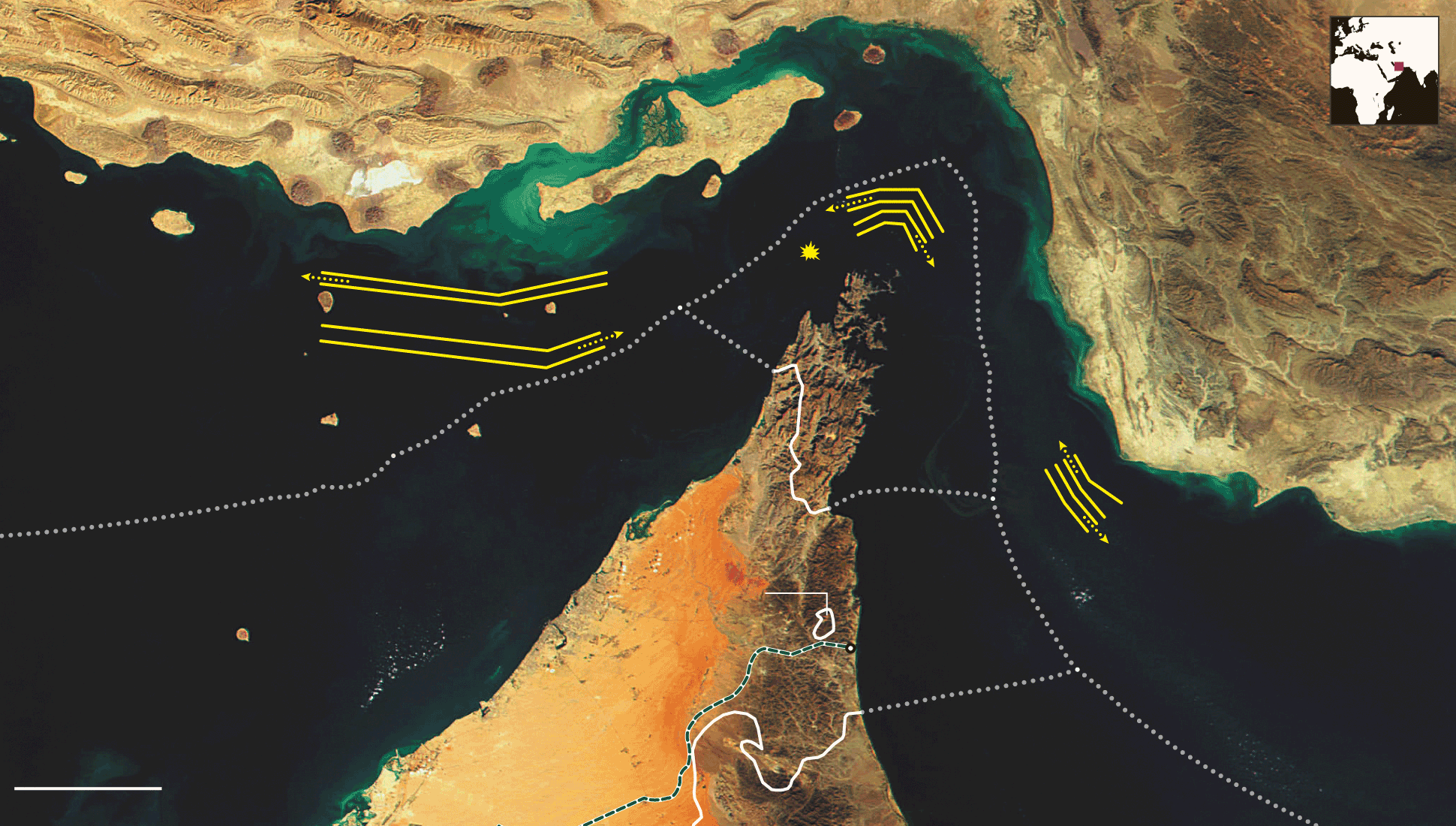
The blockade should not only be seen as a military move targeting Iran. It can also be read as an attempt to control this narrow waterway through which about one-fifth of the global energy supply passes. The US announcement that it will stop all ships sailing to or from Iran is noteworthy as a practice that pushes the limits of international maritime law. Although it is stated that commercial routes outside Iran will not be interfered with, it remains unclear to what extent such a distinction can be maintained in practice. This situation poses serious risks, especially for Asian economies that are highly dependent on energy imports.
Indeed, the crisis had a strong impact on global markets at the very first stage. Oil prices rose above $100 per barrel, indicating that markets have priced in the possibility of a prolonged disruption in energy supply. Stock markets in leading Asian economies such as Japan and South Korea plummeted, suggesting that investors are becoming more risk averse in the face of uncertainty. The sudden halt in maritime activities is a development that could have knock-on effects not only for energy markets but also for global trade in general.
Reactions from the Iranian side indicate that this process has the potential to turn into a controlled crisis. The Iranian Revolutionary Guards’ announcement that it would consider any military elements approaching the Strait of Hormuz as a ceasefire violation increases the risk of direct military confrontation. Iran’s assertion of control over the strait and its harsh rhetoric, while intended as a deterrent, also carries the risk of miscalculation.
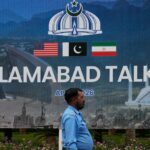
Iranian officials’ statements reflect not only military readiness but also diplomatic frustration. Abbas Araghchi’s statement that the US adopted a “maximalist” stance at a stage when the talks in Islamabad were very close to an agreement is important in understanding why the negotiations failed. In this framework, the Iranian side positions the US as an unreliable actor.
A similar unity of discourse is evident in Iranian domestic politics. Names such as Mohammad Bagher Ghalibaf and Mohsen Rezaee emphasize that Iran will not bow to US pressure and that Iran has strategic tools at its disposal that have not yet been used. This shows that Iran will not only remain on the defensive, but is preparing to respond with different means if necessary.
The regional dimension of the crisis is particularly evident along the Israel-Lebanon line. The ongoing clashes between Hezbollah and Israel can be seen as an indirect extension of the Iran-US tension. Israel’s airstrikes on southern Lebanon and Hezbollah’s response with rocket fire indicate that the conflict has evolved into a low-intensity but protracted war.
Israeli Prime Minister Benjamin Netanyahu’s statements also support this picture. Netanyahu’s assertion that operations will continue despite the fact that the threats posed by Hezbollah have been neutralized indicates that Israel’s strategy is shaped between deterrence and continuous military pressure. Moreover, Israel’s interpretation of the regional ceasefire in a way that excludes operations in Lebanon stands out as a factor limiting the effectiveness of international diplomatic efforts.
The humanitarian situation in Lebanon is worsening. The increasing number of casualties and displacement clearly demonstrates the devastating impact of the conflict on the civilian population. The targeting of even UNIFIL elements shows how fragile the security environment on the ground has become.
On the US side, there has been a significant hardening in the level of discourse. Donald Trump’s distant approach to calls for a diplomatic solution and his reluctance to negotiate suggests that Washington is prioritizing a strategy of military and economic pressure at this stage. This approach may produce deterrence in the short term, but it has the potential to deepen tensions in the long term.
Conclusion
Rather than a classic bilateral crisis, the current picture points to a multidimensional geopolitical rupture in which energy lines, regional proxy actors and global market dynamics are intertwined. The Strait of Hormuz is at the center of this equation, and any development there has the potential to directly affect not only the region but also the global system.
As diplomatic channels weaken, military rhetoric hardens and economic impacts deepen, the cost of the steps to be taken by the parties is increasing. The future of the crisis will therefore depend not only on military capacity, but also on strategic patience, diplomatic flexibility and the effectiveness of international mediation mechanisms. Otherwise, the possibility of the current tension evolving into a wider conflict that is difficult to control should not be ignored.
Image source: Financial Times, “Strait of Hormuz: the corridor of power” – https://ig.ft.com/sites/strait-of-hormuz-corridor-of-power/