The leadership of Mojtaba Khamenei should be read in Iran not only as a matter of succession but also as a process of redefining the distribution of power in the state structure. In this new era, the nature of the relationship between the religious leadership and the Revolutionary Guards will be decisive.
New Power Architecture
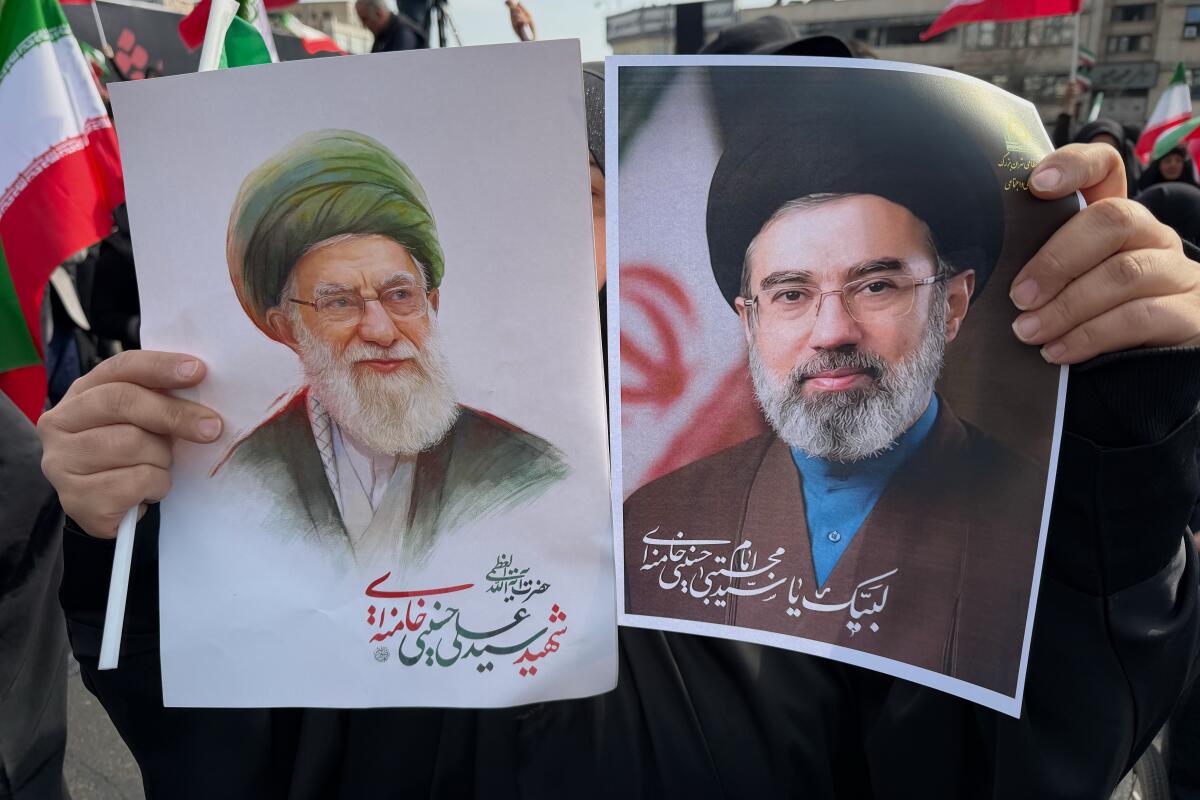
Recent developments in Iranian politics have the potential to directly affect not only the balance of power within the country, but also the geopolitical architecture of the Middle East. Following the assassination of Ali Khamenei, the longtime religious leader of Iran, the announcement of his son Mojtaba Khamenei as the country’s new religious leader has brought the debate on the future of the Islamic Republic of Iran to a new stage. This development is considered not only as a change of leadership but also as the beginning of a period in which the balance of power between the military, ideological and religious institutions in the Iranian state structure may be reshaped.
An analysis of the new leader’s political profile and the network of relations he has established in the past reveals that his closeness with security institutions and the military bureaucracy is particularly noteworthy. In this context, his relations with the Revolutionary Guards, one of the most powerful institutional structures in Iran, are critical to understanding how Mujtaba Khamenei’s leadership will take shape. According to many analysts, the political architecture of the new era in Iran will largely be shaped by the strategic alignment between the religious leadership and the Revolutionary Guards.
Leadership Shaped in the Sand
Mujtaba Khamenei’s rise to leadership is not only the result of a familial legacy. It is believed that his religious education played an important role in establishing a certain legitimacy within the religious and political elites in Iran. Qom, one of the most important centers of Shiite religious education in Iran, is one of the main centers where the ideological and religious elites of post-revolutionary Iran were trained.
Mujtaba Khamenei’s education in this city has contributed to his being seen not only as a political figure but also as a religiously equipped leader. The fact that the office of religious leadership in the Iranian political system is based on theological legitimacy increases the importance of being a cleric raised in Qom. This is considered as one of the factors that facilitated Mojtaba Khamenei’s acceptance within the system.
At the same time, his education in Qom paved the way for him to establish strong relations with religious elites and ideological circles in Iran. These relations played an important role in the formation of political networks in the following years.
Behind the Scenes Influence
Mujtaba Khamenei’s influence in Iranian politics is not a recent phenomenon. He has long been recognized as an influential behind-the-scenes actor among Iran’s political elite. Although he does not hold a visible position in the official state structure, there have been many assessments that he has established a significant sphere of influence, especially within conservative circles and the security bureaucracy.
In this context, Mujtaba Khamenei’s relations with the Revolutionary Guards are particularly noteworthy. In Iran, the Revolutionary Guards is not only a military force; it is also an institution that has significant influence in economic, political and strategic areas. Iran’s regional security strategies, military capacity and even a significant part of its economic activities are under the influence of this organization.
Therefore, Mojtaba Khamenei’s close ties with the Revolutionary Guards are seen as one of the most important elements that strengthen the institutional foundations of his leadership.
Harmonization with the Military Bureaucracy
One of the important features of the Iranian political system is the strong role of security institutions in decision-making processes. In particular, the Revolutionary Guards have a central position in determining Iran’s security strategies and implementing its regional policies.
In this context, Mojtaba Khamenei’s relations with this institution are considered as a factor that can enable the military bureaucracy to adopt the new leadership faster and stronger. In Iranian politics, the harmony between the religious authority and the military power is seen as a critical factor for the stability of the system.
The strengthening of the relationship between Mujtaba Khamenei and the Revolutionary Guards in the new era may lead to a more prominent role for the military bureaucracy in the Iranian state structure. This may mean an increase in the influence of security institutions in Iranian politics.
Rigid Ideological Line
One of the most prominent elements in the analysis of Mujtaba Khamenei’s political profile is the perception that he is ideologically closer to a harder line. His strong commitment to the fundamental principles of the Islamic Revolution suggests that the new leadership may emphasize revolutionary ideology more prominently.
This could mean a greater emphasis on the implementation of the principles of the revolution, especially in domestic politics. Strengthening the ideological character of state institutions, making the revolutionary discourse more prominent in political language and preserving the founding principles of the system could be among the salient features of the new era.
While this approach is seen by some as necessary to preserve the ideological integrity of the Iranian state, it is criticized by others as a further narrowing of the political space.
Difficult Geopolitical Environment
Mujtaba Khamenei’s rise to leadership also took place in an extremely complex geopolitical environment. The loss of his father, Ali Khamenei, as well as other members of his family during the attacks by the US and Israel, made the process more dramatic both personally and politically.
In such an atmosphere, coming to the leadership may pave the way for a stronger emphasis on resistance in Iran’s foreign policy discourse. In Iranian politics, the perception of external threat is often used as an element that strengthens domestic mobilization.
It is therefore likely that the themes of security and resistance will feature more strongly in the discourse of the new leadership.
Intra-System Balances
Although Mujtaba Khamenei’s leadership has been declared, it is known that there are actors with different tendencies within the Iranian political system. Reformist circles, pragmatic conservatives and the security bureaucracy represent different power centers in Iranian politics.
In this context, there are some segments within the system that keep their distance from Mujtaba Khamenei. However, the strong network of relations she established while her father was still alive and her influence within the Revolutionary Guards and religious elites have been one of the important factors that put her ahead of other actors in this process.
Regional Orientation
The leadership of Mojtaba Khamenei implies a certain continuity rather than a radical change in Iran’s regional strategy. Iran’s policy of influence and security-centered strategic approach in the Middle East is likely to continue.
At this point, the role of the Revolutionary Guards is critical. A significant part of Iran’s regional networks, military capacity and strategic operations are carried out through this organization. Therefore, it is considered as a possible scenario that the role of the Revolutionary Guards in Iran’s foreign policy will further strengthen in the new era.
Conclusion
The emergence of Mojteba Khamenei as Iran’s new Supreme Leader is an important turning point in the country’s political history. His extensive religious education in Qom, his strong ties with Iran’s political elite, and especially his close ties with the Revolutionary Guards are among the key factors that made his rise to leadership possible.
The strategic alignment with the Revolutionary Guards, seen as one of the most important pillars of the new leadership, may lead to a further strengthening of the role of the military bureaucracy in the Iranian political system. Therefore, the era of Mojtaba Khamenei can be seen not only as a change of leader, but also as the emergence of a new power architecture in the Iranian state structure in which the influence of security institutions has become more pronounced.
Iran’s domestic political balances, regional strategies and security policies will be largely shaped by the nature of the relationship between the religious leadership and the Revolutionary Guards in this new era. Therefore, the leadership of Mojtaba Khamenei will continue to be on the international agenda in the coming years as a development to be closely monitored not only for Iran but also for the future of the Middle East.
Image source: Vahid Salemi / Associated Press, Los Angeles Times, “Why Iran’s Choice of Supreme Leader Signals Defiance Against U.S., Israel,” March 9, 2026.