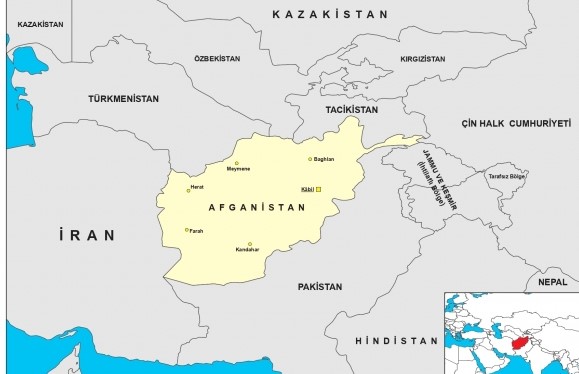
After 2021, the Taliban established military and administrative control across the country, but this control did not create political legitimacy equivalent to internal stability. Restrictions on women’s rights, the absence of civic participation and the rigid religious rule of the Islamic Emirate of Afghanistan are the main factors preventing international recognition. Nevertheless, the government has sought to consolidate its power internally with the rhetoric of “security and order” and to gain diplomatic recognition externally with the image of a “sovereign, neutral, self-sufficient Afghanistan”. Economically, the Taliban have turned to mineral exports, customs revenues and China-Central Asia-linked infrastructure investments to compensate for the loss of revenue following the opium ban. The foreign policy strategy is based on a pragmatic balancing act that emphasizes economic realism while maintaining ideological continuity. In the post-US vacuum, the administration aims to gain limited benefits from each actor without fully committing to any bloc.
Afghanistan-Pakistan tensions have been escalating in recent weeks, undermining the Taliban leadership’s security and stability goals, which are at the center of both its domestic and foreign policy. This article will discuss the Afghan foreign policy framework in light of recent developments.
Pakistan: From Former Ally to Border Threat
The relationship between the Taliban and Pakistan was historically based on strategic solidarity, but today it has turned into an open security crisis. The main fault line is the Tehrik-i-Taliban Pakistan (TTP), also known as the Pakistani Taliban. Islamabad interprets the TTP’s sanctuary on Afghan soil and its attacks from Afghanistan into Pakistan as explicit or implicit support for the Taliban. In response, the Taliban consider Pakistan’s occasional operations against the organization in Afghan airspace as a “violation of sovereignty”. The border clashes since early 2024 are a concrete manifestation of this tension. The Pakistani army carried out attacks on TTP-linked targets in Afghanistan’s Khost and Kunar provinces, to which the Taliban responded with artillery fire and counterattacks on the border. This has led to frequent closures of border crossings (Torkham and Chaman), disrupting trade and food flows between the two countries. The recent Pakistani airstrike on a building near Kabul Airport where TTP leader Noor Wali Massoud was holed up is seen to have escalated this tension in bilateral relations to the next level.
In fact, the Taliban is using this crisis not only as a security issue but also as an opportunity to “get rid of Pakistani tutelage”. The two ideological siblings are now at odds over the definition of sovereignty. But Islamabad’s security pressure and Kabul’s quest for independence have created a permanent rupture in regional stability. Nevertheless, Kabul’s recent steps towards diplomatic normalization with Pakistan’s other regional rival, India, are noteworthy.
India: Quiet and Pragmatic Normalization
India has not yet formally recognized the Taliban regime, but has re-established diplomatic and technical relations. It reopened its embassy in Kabul in 2023 and has been providing food, health and education assistance since then. The main priority of India’s Afghanistan policy is to counterbalance Pakistani influence and prevent terrorism from being directed towards India. The Taliban explicitly assured Delhi that “Afghan territory will not be used against any country – states or organizations”. In exchange for this assurance, India has increased infrastructure projects, education programs and trade aid. Relations appear to be moving along a quiet but steady diplomatic line. As a result, for India, the Taliban is a necessary part of keeping the Pakistan-centered security risk in check; for the Taliban, India is both a sign of legitimacy and a counterweight to Pakistan.
In addition to these two actors, the Taliban leadership needs to maintain a multidimensional and complex relationship with other states in the region.
Iran and Central Asian States: Common Denominator “Water and Energy” Policies
The main commonalities in relations between Iran, Central Asian countries and Afghanistan are water resources, energy connections and border security. Afghanistan uses water as a geopolitical lever thanks to its geographical location on the Helmand River and Amu Darya basins. The Taliban administration is pursuing the large-scale Qosh Tepe Canal project to boost agricultural development and energy production, which has raised concerns of water scarcity in both Iran and Central Asian states. To turn this tension in its favor, Afghanistan is developing an “energy-water swap” approach, offering Iran and Uzbekistan energy, fuel and electricity cooperation. In this way, the Taliban has turned its natural resources into a diplomatic tool, creating a balancing mechanism against regional pressures.
Competitive Cooperation with Iran
Iran is pragmatic but distant in its relations with the Taliban. The Helmand River water-sharing issue has occasionally led to military conflict. Nevertheless, the two countries maintain contacts on border trade, fuel shipments and migration management. Iran’s main concern is the influx of migration from Afghanistan, drug trafficking and the possibility of Sunni radicalism crossing the border. The Taliban see Iran as both an economic supply line and a diplomatic buffer against Western pressure. But Tehran’s criticism of discrimination against the Shia population and violations of women’s rights creates structural mistrust in the relationship. For this reason, the relationship between the two countries operates on the basis of interest-based forced proximity.
Cooperation and Problems with Central Asian States
Uzbekistan and Turkmenistan have more technical and economically oriented relations with the Taliban administration. Energy exports, power lines, transit and projects such as TAPI-CASA-1000 (a high-voltage power line project to transport electricity from Kyrgyzstan and Tajikistan to Pakistan via Afghanistan) form the basis of communication. The Taliban see these countries as silent supporters of international legitimacy. Tajikistan, by contrast, has an openly problematic relationship with the Taliban leadership. Dushanbe is frustrated by the Taliban’s inability to control radical elements in the north and criticizes the repression of the Tajik minority in Afghanistan. Tajikistan also provides shelter to members of the former Afghan Republic. The Tajikistan-Afghanistan line is therefore the most tense link in the regional security structure. In general, Central Asian states see Afghanistan as a security risk as much as an economic opportunity, and the Taliban are eager to develop relations with these countries, as they see this as a vital strategy to strengthen their regional legitimacy and break their isolation. However, relations with major powers such as the United States, Russia and China are also central to Kabul’s foreign policy goals.
Russia, China and the United States: Prudent Balance with Great Powers
Russia: First Major Power to Recognize the Taliban
In July 2025, Russia became the first major power to officially recognize Taliban rule. This recognition gave the Taliban a significant diplomatic advantage. Moscow wants to make Afghanistan part of its self-determined Central Asian security architecture and is engaged in energy and fuel supplies, educational cooperation and intelligence coordination. However, the Ukraine war and economic constraints have limited Russia’s influence in Afghanistan. Nevertheless, Moscow has become the symbolic center of reference for the Taliban’s quest for international legitimacy.
China: Economic Partnership, Political Distance
China appears to be the most active actor cooperating with the Taliban without recognizing them. Beijing’s main interest is in suppressing elements linked to the East Turkestan Islamic Movement (ETIM) and stabilizing the border with western China. In return, the Taliban offer China access to mineral resources, exploitation of the Mes Aynak copper field and land connectivity through the Wahan Corridor. Sino-Afghan relations are currently based on an exchange of economic cooperation and security guarantees. However, Beijing conditions diplomatic recognition on “security stability in Afghanistan”. The Taliban are open and eager to maintain relations with China, as Chinese investment serves as the country’s main development lever.
USA Low Profile, Strategic Distance
After the withdrawal, the US has only approached Afghanistan with a policy of “remote security” and “humanitarian aid”. Washington still does not officially recognize the Taliban regime and continues to block the reserves of the Afghan Central Bank. The US remains concerned that Afghanistan is becoming a safe haven for international terrorist organizations. The US is currently unable to directly pressure Afghanistan, but the continued financial isolation serves as an indirect economic pressure for the Taliban. The Taliban leadership has avoided open confrontation with the United States, but has made no move to rebuild relations. Recent requests by US President Donald Trump for the US military to re-locate to Bagram Base have been openly rejected by Kabul. It seems likely that this situation will emerge as a new problem in bilateral relations in the near future.
Turkey-Afghanistan Relations: Continuous Dialogue
Turkey is one of the few countries to keep its diplomatic mission open without recognizing the Taliban regime. The Turkish Embassy in Kabul is active and the Turkish Cooperation and Coordination Agency (TIKA) continues to provide humanitarian assistance. Turkey’s Afghanistan policy is based on a strategy of “pragmatic engagement without recognition”. Ankara avoids establishing a direct political legitimacy relationship with the Taliban, but maintains a de facto relationship by carrying out projects in infrastructure, construction, health and education. Migration management, security coordination and humanitarian aid are prioritized agendas. For the Taliban, Turkey is seen as a reliable partner because it is ideologically neutral, has a Muslim identity and has open channels of contact with the West. Ankara’s neutrality increases the Taliban’s capacity to send messages to the Western world, while Turkey gains regional diplomatic visibility from this relationship.
Conclusion
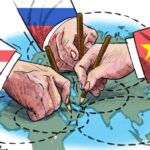
Afghanistan’s foreign policy today is based on pragmatic balancing within ideological continuity. The Taliban leadership, although unrecognized, has become a de facto actor in the regional system. Security-based confrontation with Pakistan, quiet normalization with India, water-energy diplomacy with Iran and Central Asia, diplomatic and economic partnership of interest with Russia and China, low-profile engagement with the United States and a sustainable line of communication with Turkey are the foundations of the current architecture of the Taliban foreign policy. Afghanistan today is not openly pressured by any bloc, but economic isolation and lack of recognition are the main factors determining the regime’s internal and external fragility. The Taliban is simultaneously pursuing a policy of multilateral diplomacy and resource-based development in order to break out of this logjam.