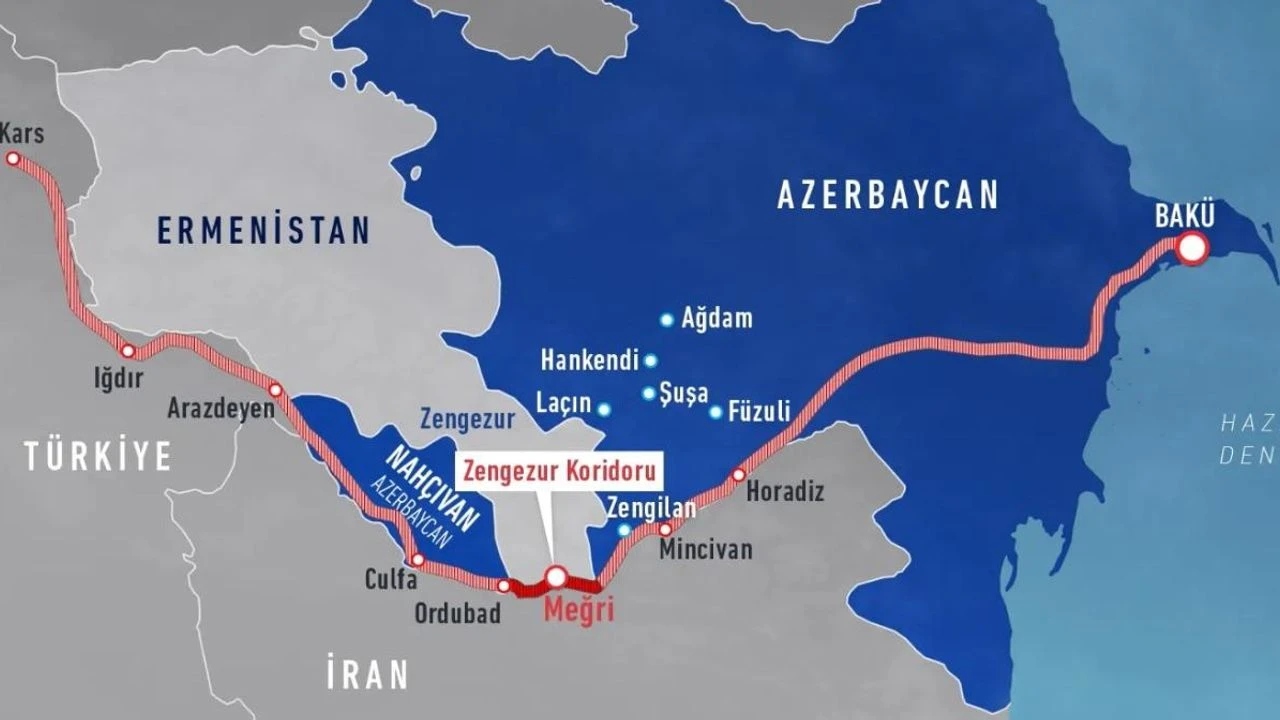
The recent escalation of tensions between Russia and Azerbaijan is a turning point that has shaken the balance of power in the South Caucasus and exposed the fragility of regional alliances. The Zangezur Corridor agreement reached in Istanbul in June 2025 between Azerbaijan, Armenia and Turkey excluded Russia and triggered Moscow’s reaction by agreeing to create a transport corridor linking Azerbaijan to Nakhchivan via Armenia. This crisis, fueled by mutual retaliation and rooted in deep geopolitical shifts, reflects Azerbaijan’s growing assertiveness and Russia’s effort to maintain its influence in the region. Azerbaijan-Israel rapprochement, the order shaped by the 2020 Karabakh victory, Iran-Israel tensions, Armenia’s internal and external problems, and the regional influence of Russia and Turkey paint a complex picture that threatens a delicate balance in the South Caucasus. This analysis outlines the timeline of the escalation of the crisis, examines the positions of Russia and Azerbaijan, assesses the relevant regional dynamics, and considers Turkey’s current and future role.
Escalation of the Crisis
December 2024: Azerbaijan Airlines Crash
An Azerbaijani passenger plane crashed near Grozny, killing 38 people. Azerbaijan blamed Russian forces for the crash, but Moscow’s vague responses left the issue unresolved. Officials have strengthened accusations against Russia, suggesting that a similar “accident” involving President Aliyev’s plane was planned.
June 27, 2025: Yekaterinburg Raids
Russian police have detained more than 50 people in raids targeting ethnic Azerbaijanis in Yekaterinburg in connection with a decades-old murder investigation. The deaths of brothers Huseyn and Ziyaddin Safarov during the operation (the Azerbaijani Health Ministry claimed the cause of death was torture and severe injury) caused outrage in Baku. Although Russia claims that one brother died of a heart attack and the other is under investigation, the lack of independent verification has raised suspicions of a cover-up.
June 30-July 1, 2025: Azerbaijan’s Reaction
Azerbaijan retaliated by raiding the Baku offices of Russia’s state-backed Sputnik news agency, arresting seven employees on charges of fraud, money laundering, cybercrime and drug trafficking. The operation took place after Sputnik’s accreditation was revoked in February 2025. Eight Russian citizens, including journalists, were detained, and their bodies showed signs of beatings in court.
Diplomatic Crisis
Both countries have escalated diplomatic tensions: Azerbaijan summoned Moscow’s ambassador to condemn Russia’s actions as systematic violence; Russia summoned Azerbaijan’s ambassador, calling the Sputnik raid an “attack on its interests”. Russia canceled the visit of Deputy Prime Minister Alexei Overchuk to Baku, while Azerbaijan suspended cultural events related to Russia, deepening tensions and highlighting the lack of mechanisms for resolution.
Zangezur Corridor Agreement
In June 2025, an agreement was announced between Azerbaijan, Armenia and Turkey on the establishment of the Zangezur Corridor linking Azerbaijan to Nakhchivan via Armenia and excluding Russia. This agreement, which bypasses Moscow’s control over regional trade routes, has intensified Russia’s reaction.
Russia’s Approach
Russia has adopted a cautious stance in the face of the crisis, but is struggling to maintain its influence in the South Caucasus. While the Yekaterinburg raids are presented as a legitimate operation targeting a criminal network, official statements denying allegations of torture in the deaths of the Safarov brothers are losing credibility due to a lack of independent verification. The Sputnik raid and the arrests of Russian citizens are perceived by Moscow as provocations, which has increased diplomatic tensions. Foreign Ministry spokesperson Maria Zakharova stated that provocative actions aimed at destabilizing relations should be abandoned and called on Azerbaijan to return to the level of “strategic partnership”. However, this rhetoric reflects Russia’s concern to preserve its authority. The Zangezur Corridor agreement is a serious concern as it threatens Moscow’s regional mediation role and control over trade-security arrangements. The Russia-Ukraine war, now in its third year, has drained Moscow’s resources, tarnished its regional image and limited its power projection. Armenia’s shift towards the West and Azerbaijan’s diplomatic audacity further expose this weakness, forcing Russia to strike a balance between coercive tactics and dialogue.
Azerbaijan’s Approach
Azerbaijan, buoyed by its 2020 Karabakh victory, is taking an assertive stance to challenge Russian influence. The deaths of the Safarov brothers are presented as evidence of Russian aggression, based on findings of torture and severe injuries supported by autopsy reports, while the unsolved 2024 plane crash is framed as a deliberate act, fueling nationalist sentiments. Public reaction against Russia has been on the rise, with state television describing Russia as a “prison of peoples”, the Azerbaijani judiciary accusing Russian institutions and individuals such as the FSB of murder and launching investigations, the closure of the Russian House in Baku and the removal of Russian as a second language of education. Moreover, President Aliyev’s meeting with Ukrainian President Zelensky and his messages of solidarity strengthened Azerbaijan’s orientation towards the West. The Sputnik raid and the arrests of Russian nationals show that the Aliyev administration is directly challenging Moscow, but the lack of evidence for the charges raises suspicions of political motivation and judicial overreach. The appearance of detainees in court with signs of beatings undermines Azerbaijan’s claim to the moral high ground and reinforces suspicions of ill-treatment.
Strategically, Azerbaijan is prioritizing the Zangezur Corridor by deepening ties with Turkey and Israel, aiming to reduce Russian dominance and strengthen regional autonomy. Domestically, the crisis reinforces public support by portraying Russia as a threat to sovereignty, but this aggressive stance risks tensions spiraling out of control, especially in the event of Russian or Iranian retaliation. While Western support and Russia’s weakened position have bolstered Azerbaijan’s self-confidence, the lack of transparency in its actions has led to criticism.
Regional Dynamics
Interconnected dynamics shape the context of the crisis, increasing its complexity and potential for spillover. Azerbaijan’s post-2020 strengthening partnership with Israel includes oil exports through Turkey’s Ceyhan port and drone purchases, increasing its military and economic power. Iran’s October 2024 allegations that Azerbaijan harbors Israeli agents, although denied by Baku, reinforce the perception that Azerbaijan’s pro-Israel stance and the Zangezur Corridor pose a threat to Tehran’s interests. This aligns Iran with Russia and increases the risk of the crisis escalating into a regional conflict. Speculation of an Israeli-Iranian conflict puts Azerbaijan in a difficult position; despite its claim of neutrality, its ties with Israel could trigger Iranian retaliation. The Azerbaijan-Armenia peace process, while progressing on border demarcation, has been stalled by the Zangezur Corridor and Armenia’s constitutional problems. The June 2025 corridor agreement threatens Moscow’s regional control by excluding Russia. In Armenia, opposition to normalization with Turkey and Azerbaijan and alleged coup attempts weaken negotiating power; Russia’s ineffectiveness in 2020 has pushed Armenia towards the West, eroding Moscow’s alliances. The Russia-Ukraine war drained Moscow’s resources and image, allowing Azerbaijan and Armenia to pursue independent policies. Trends towards the West in the former Soviet states (Moldova, Georgia, Armenia, Kazakhstan) further complicate regional dynamics.
Near Future Perspective
The trajectory of the crisis is uncertain, with the possibility of escalation, stalemate or regional spillover. Russia could escalate tensions through gas supply disruptions or pressure such as targeting Azerbaijanis in Russia. Azerbaijan’s rapprochement with Turkey and Israel could trigger retaliation from Russia or Iran, leading to a wider conflict. Diplomatic protests and canceled contacts, coupled with unresolved issues, point to a freeze in relations. While the Iran-Israel crisis and the Russia-Ukraine war show the weaknesses of Iran and Russia, the change in the region could give rise to crises in which these countries could be indirectly or directly involved. This could destabilize the South Caucasus, drawing in Turkey and Western powers. While mediation by Turkey or Georgia is possible, Russia’s exclusion from key agreements makes this effort difficult. Azerbaijan’s resolute stance and the implementation of the corridor will determine the course of tensions and affect regional power dynamics.
Turkey’s Position and Future Role
Turkey’s position in the crisis is shaped by its strategic alliance with Azerbaijan, cautious normalization efforts with Armenia and delicate relations with Russia. Military and economic cooperation with Azerbaijan makes Turkey a defender of the Zangezur Corridor, but this proximity risks alienating other actors and undermining its mediation credibility. Armenian Prime Minister Nikol Pashinyan’s visit to Istanbul on 20 June 2025 was a step towards normalization, but opposition in Armenia and Turkey’s pro-Azerbaijani stance cast doubt on its neutrality. Relations with Russia are balanced by NATO membership and economic dependence, but the Zangezur Corridor deal has increased tensions. Turkey’s potential to mediate in the Azerbaijan-Armenia peace process could strengthen its regional influence, but its proximity to Azerbaijan clouds its neutrality. The Zangezur Corridor aims to increase Turkey’s influence in the South Caucasus and Central Asia, but this conflicts with Russian and Iranian interests and requires careful diplomacy. Maintaining pragmatic ties with Russia, while supporting Azerbaijan’s challenge, is complicated by Moscow’s sensitivities after the Ukraine war. NATO membership and Azerbaijan’s orientation towards the West offer opportunities for alignment with the West, but could strain relations with Russia. Turkey’s success depends on its ability to balance these contradictions and avoid conflict.
Conclusion
Sparked by the 2024 plane crash and escalated in 2025 with the Yekaterinburg raids and Sputnik arrests, the Russian-Azerbaijani crisis reflects the struggle for influence in the South Caucasus. Azerbaijan’s orientation towards Turkey and Israel, supported by the Zangezur Corridor agreement, exploits Russia’s weakness, while Armenia’s shift towards the West and its internal turmoil erode Moscow’s influence. Azerbaijan’s ties with Israel increase tensions with Iran and risk regional spillover. Turkey’s position offers opportunities for stability, but its proximity to Azerbaijan requires prudent diplomacy to avoid provoking Russia and Iran. The resolution of the crisis depends on whether Azerbaijan’s stance and Turkey’s mediation can overcome these dynamics.